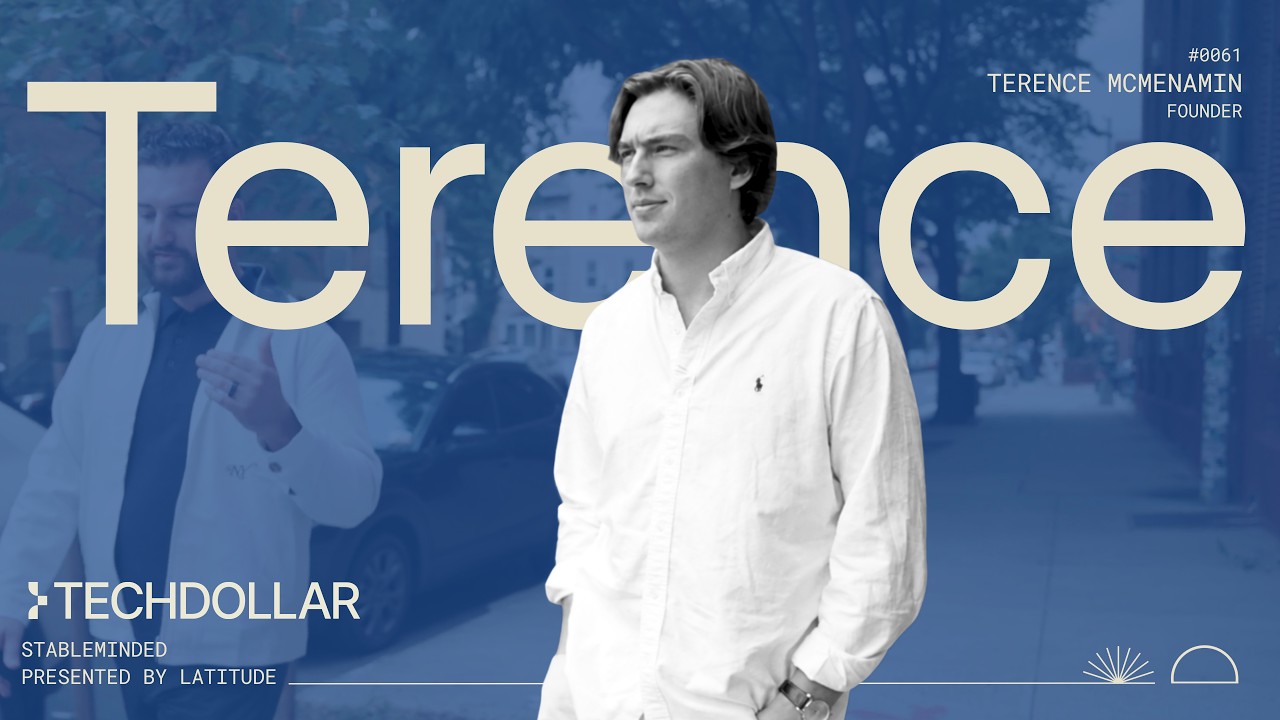
Stableminded · · 49 min
He Left a16zCrypto to Build The First Stablecoin Clearinghouse
With  Sam Broner
Key takeaways
The Better Money Company raised $10 million from a16z crypto, Box Group, Sunflower and angels to build a stablecoin clearinghouse.
Sam Broner says payments need guaranteed settlement times and flat-rate swaps between stablecoins, which tools built for trading do not offer.
Sam Broner expects enterprise agent payments to be a much larger market than consumer agent payments.
Watch the episode

0:00Better Money raises $10 million for a stablecoin clearinghouse1 of 10
Summary
Former a16z crypto investor Sam Broner says stablecoins were built for trading and is building a clearinghouse to make them work for payments.
Sam Broner, who was an investor at a16z crypto, has founded The Better Money Company and raised $10 million from a16z, Box Group, Sunflower and angels to build a stablecoin clearinghouse. The company says the clearinghouse gives payments businesses firm guarantees when they move from one stablecoin to another.
Built for trading, not payments
At a16z crypto, Sam Broner says he met with hundreds of stablecoin companies, mature fintechs and about a dozen banks. His conclusion: stablecoins are faster, cheaper and global, but were optimized for trading pairs against tokens such as bitcoin and ETH, not for payments.
Broner says payments need a guaranteed time of settlement and flat-rate pricing to swap between stablecoins. He compares today's setup to selling Wells Fargo dollars at a variable price to get Bank of America dollars, where "the more you sent, the more you lost."
“When you move money from a Wells Fargo bank account to a Bank of America bank account, you don't sell Wells Fargo dollars at a variable price to get Bank of America dollars. And it turns out the more you sent, the more you lost. It's ridiculous.”
Sam BronerMembers and clients
The Better Money Company works with Bridge, Paxos, Frax, Mzero, Moonpay and Brale as member issuers, and with Fantom and MetaMask, which sponsor stablecoins through Bridge. Clients include Ramp, Privy, Turnkey and Modern Treasury. Without a clearinghouse, Broner says, a new issuer would have to run a liquidity campaign and build a trading and operations team. The company charges a fee on transactions but, he says, lets no slippage affect them.
Faster payouts
Sam Broner says instant payouts for gig workers could now be built "basically in a weekend" because stablecoins are programmable, nearly instant and nearly free. He says typical marketplace payouts take five to 10 days, and in some cases 30 or 45 days. A seller paid three days faster could buy materials three days earlier and compress the sales cycle, he argues. He also points to correspondent banking, where neither timing nor cost is known up front.
Agents with budgets
Sam Broner predicts enterprise agent payments will be much larger than consumer ones, since people pay from a fixed budget. He urges founders to build applications where agents pay rather than tooling: "if you find a big pot of gold, that's more valuable than selling a lot of shovels."
Sam Broner's pitch is that stablecoins already have speed and low cost, and that a clearinghouse with fixed prices and settlement guarantees is what mature payments companies need to use them. He sees that as an opportunity for stablecoins to become even more commonplace.



Microsoft, The Clearinghouse, Bank of America, and Wells Fargo come up most.
- People
- Sam Broner
- Bill Gates
- Satya Nadella
- Bob Bench
- Christian Catalini
- Dani Vilardell
- Drew Rogers
- Jeffrey Litt
- Steve Luko
- Zach Fowler
- Companies
- Microsoft
- The Clearinghouse
- Bank of America
- Wells Fargo
- The Better Money Company
- Boston Fed
- BVNK
- Bridge
- Altitude
- Modern Treasury
- Ramp
- Uber
- Sunflower
- AWS
- Radius
- Braille
- Etsy
- Fantom
- Frax
- MetaMask
- MoonPay
- MZero Labs
- Paxos Labs
- Privy
- Turnkey
- Andreessen Horowitz
- Cursor
- Didi
- LimeBike
- MIT Bitcoin Club
- Ridgewood Savings Bank
- St. Louis First Chemical Bank
- Stripe
- a16z crypto
- BoxGroup
- Centre Consortium
- DCI (Digital Currency Initiative)
- MIT Media Lab
- MIT Sloan
- X402 payment protocol