Stabledash Live · · 22 min
Why Institutions Prefer Canton Network, and Who Can Read Its Private Data
With 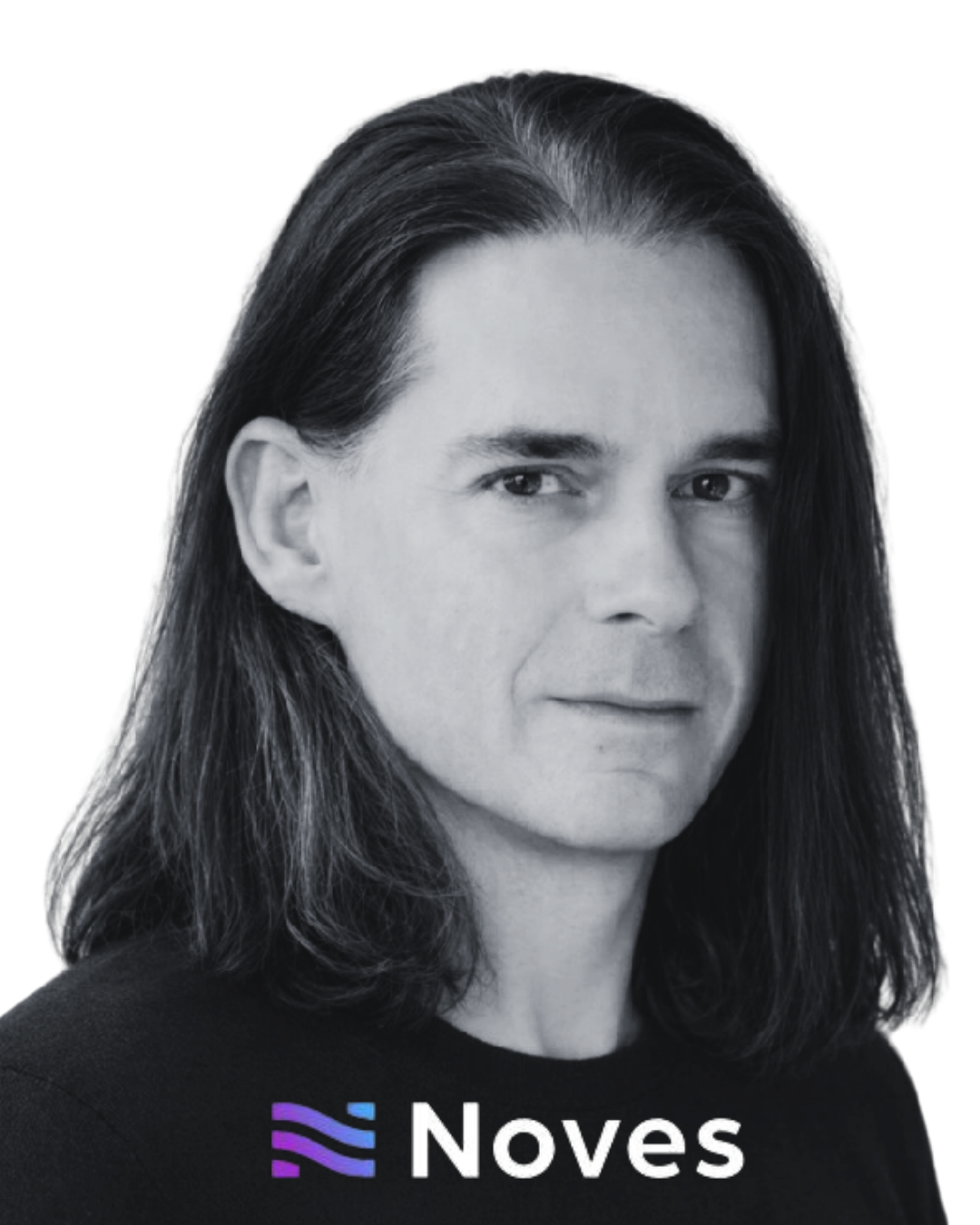 Ben Roy
Key takeaways
Noves is deployed on 110+ public blockchains but is now focused on Canton Network, where it runs both a public data index and private software next to a client's validator.
Ben Roy says institutions are comfortable with Canton Network because whitelisted validators and node-hosted wallets create a chain of responsible parties.
Roy predicts AI agents will want privacy by default, and Noves is working on selective disclosure so users can share only chosen data with chosen parties.
Watch the episode

Summary
The company that indexes public chains now puts software inside institutions' own perimeters, because on Canton the data cannot be seen from outside.
Ben Roy, co-founder and CEO of Noves, describes his company simply: "we help people get data off of blockchains." Noves is deployed on 110+ public chains, but Roy says its focus right now is Canton Network, a network where privacy changes how that data work can be done.
A spreadsheet origin story
Ben Roy traces Noves back to a fund administrator who told his team to put their trading data in a spreadsheet so staff could type it into a management system. "You want to manage tens of millions dollars via spreadsheets that people are gonna type in?" he recalls asking. He argues that data has been underserved across crypto, with little focus on accuracy, completeness or meaning, and that blockchains mix a chain's technical details with the context of what is happening, where other systems separate the two.
“You want to manage tens of millions dollars via spreadsheets that people are gonna type in?”
Ben RoyTwo sides of one platform
On Ethereum, Roy says, Noves has an automated tool that pulls random transactions and checks whether it knows what they are. On Canton Network that is not possible "because you can't see that stuff." So the company runs two sides: a public index of network data, and deployable software that sits alongside a client's validator, runs in the client's security context and reaches private data. "We don't get the data," Roy says.
Why institutions chose Canton
Ben Roy says Canton Network hit a sweet spot between what people want from blockchain and what regulated parties do not want taken away. A node cannot simply join: it must be whitelisted by a vote of the super validators, unlike on Ethereum. Wallets must be hosted, provisioned and operated by a node on the network. Roy says that kind of chain of responsible parties "is how the rest of the world works," and that Canton is better aligned with how the real world operates than projects that tried to change how people think.
Agents and selective disclosure
Roy expects AI agents to be smart enough to want privacy and to care about it more than the average person. He says he does not see any way private by default does not become the norm. Meanwhile Noves is working on letting users disclose only the private data they choose, and only to the parties they choose.
Roy's view is that the privacy that brings institutions to Canton Network also takes away the public tools the industry built. Noves is betting that data infrastructure running inside the institution, together with controlled disclosure, fills that gap. He expects AI agents to push the rest of the ecosystem toward private by default as well.
Stablecoin Standard and LeFi come up most.
- People
- Ben Roy
- Christian Catalini
- Beth
- Drew Rogers
- Eric
- Philip
- Rialo
- Yuval
- Zach Fowler
- Companies
- Stablecoin Standard
- LeFi
- Noves
- Dfns
- Digital Asset
- Visa Ventures