Stabledash Live · · 25 min
Tokenized Sovereign Debt vs Stablecoins with M1X Global
With 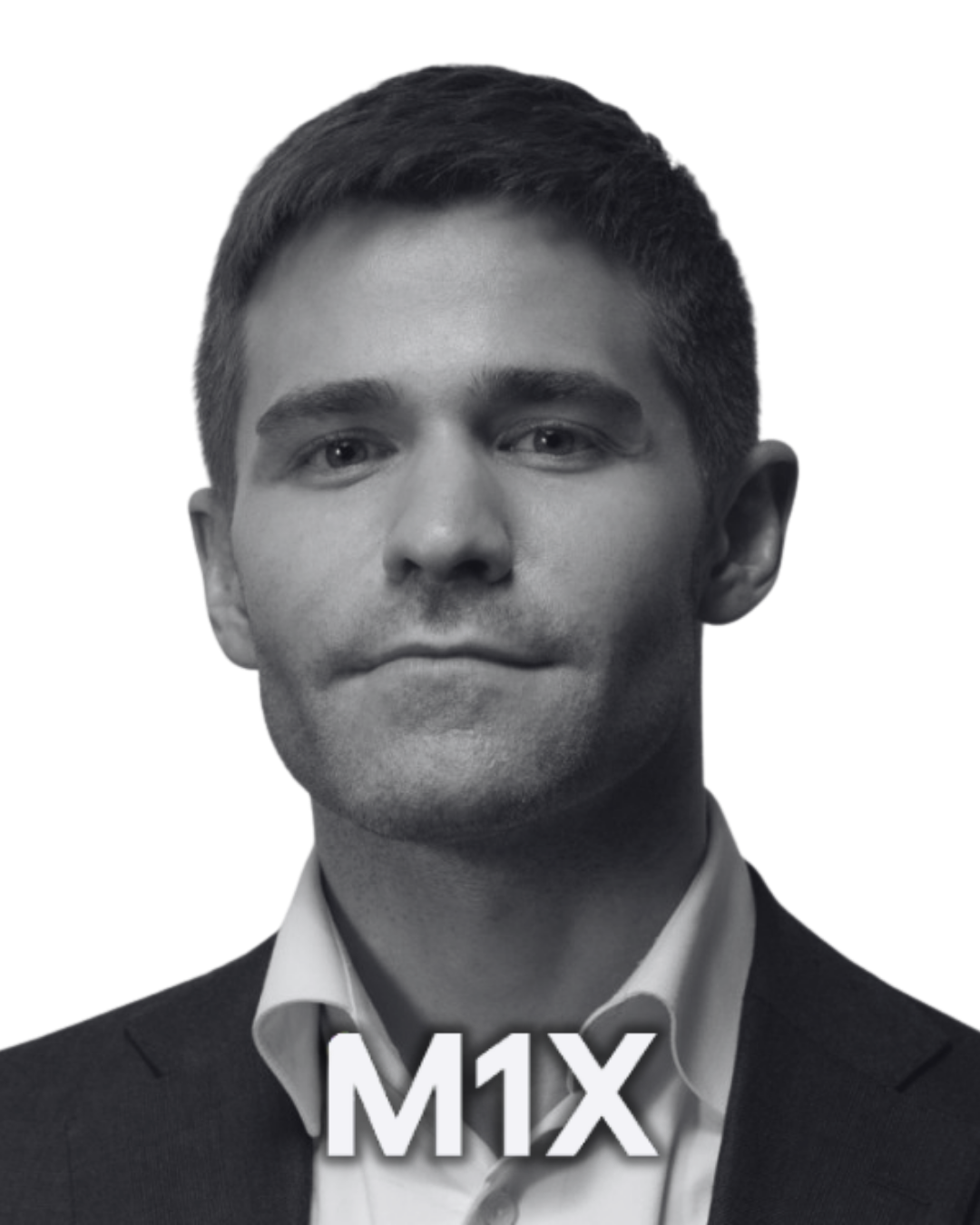 Jordan Goldman
Key takeaways
M1X Global closed a $3M angel round backed by Balaji Srinivasan, Galaxy, Cumberland, FJ Labs and the Stellar Foundation.
USDM1 is issued directly by the Republic Of The Marshall Islands as a Brady Bond-structured sovereign debt instrument that is fully backed by treasuries, not as a wrapped or tokenized product.
Mark Lurie says netting under New York law could cut the collateral institutions need by about 90%, and that the lack of assets like this is holding back institutional adoption.
Watch the episode

Summary
The founders argue that USDM1, a sovereign debt instrument issued onchain by the Marshall Islands, gives institutions the netting and collateral treatment that stablecoins lack.
M1X Global has closed a $3M angel round backed by Balaji Srinivasan, Galaxy, Cumberland, FJ Labs and the Stellar Foundation. The company works with the Republic Of The Marshall Islands, which issues USDM1, an instrument that co-founder Jordan Goldman calls a direct sovereign issuance rather than a stablecoin.
A sovereign issuer onchain
Goldman describes the Republic Of The Marshall Islands as a former US territory in the Pacific that has dealt with banking and payment issues. Mark Lurie calls the country "ground zero" for the correspondent banking problems that stablecoins were meant to solve. USDM1 also carries the country's UBI program: Goldman says it runs for 20 years, and every citizen can receive up to 10% of their annual income each quarter. Payments go through the Lomalo app, which was announced alongside CrossMint and uses a self-custodial wallet.
“If you actually hold the underlying, that's what the the sovereign issuance is. That's what the global financial system is actually wired and assumed to be based on. That's why US treasuries and sovereign debt is a bigger market than money market funds, money supply, corporate debt, etcetera. I mean, it is the base of the financial system. It's the actual thing.”
Brady Bonds, not gift cards
Goldman says stablecoins are a corporate exposure built to mimic the dollar. USDM1, by contrast, uses the blockchain as its register and follows the Brady Bond model under New York law. He says about $150 billion of Brady Bonds have been issued historically, with $10 trillion traded in secondary markets, and that none has ever defaulted. Lurie compares the difference to dollars versus a gift card. Every unit has a treasury held by a trustee, and he says that under New York law the trustee must liquidate it when a holder asks for their dollar back.
Netting for institutions
Lurie says USDM1 is designed to be held by banks and counts as a high quality liquid asset under Basel rules. He adds that Anchorage has announced support for it. In his view, netting in crypto works operationally but is not legally enforceable, because bankruptcy courts let counterparties "cherry pick" trades. He estimates that enforceable netting probably reduces required collateral by 90%.
Goldman calls derivatives a $700 trillion market where netting eliminates tens of trillions of dollars of risk every year. He says crypto's derivatives market is roughly the same size as its spot market, which is out of line with traditional finance, and he names netting as a core primitive that has been missing.
The founders present sovereign debt as the base layer that onchain finance has been missing. Lurie argues that institutions will not move onchain without assets that are capital efficient under regulation. He also says stablecoins alone cannot serve everyday life in emerging markets without the sovereign instruments that connect countries to each other.



Republic Of The Marshall Islands, Crossmint, Circle, and IMF come up most.
- People
- Mark Lurie
- Jordan Goldman
- Companies
- Republic Of The Marshall Islands
- Crossmint
- Circle
- IMF
- World Bank
- M1X Global
- Tether
- Anchorage Digital
- Balaji Srinivasan
- Cumberland
- FJ Labs
- Galaxy
- Stellar Development Foundation
- Dfns