Stabledash Live · · 9 min
The Routing Layer Behind Robinhood, MetaMask, and Phantom
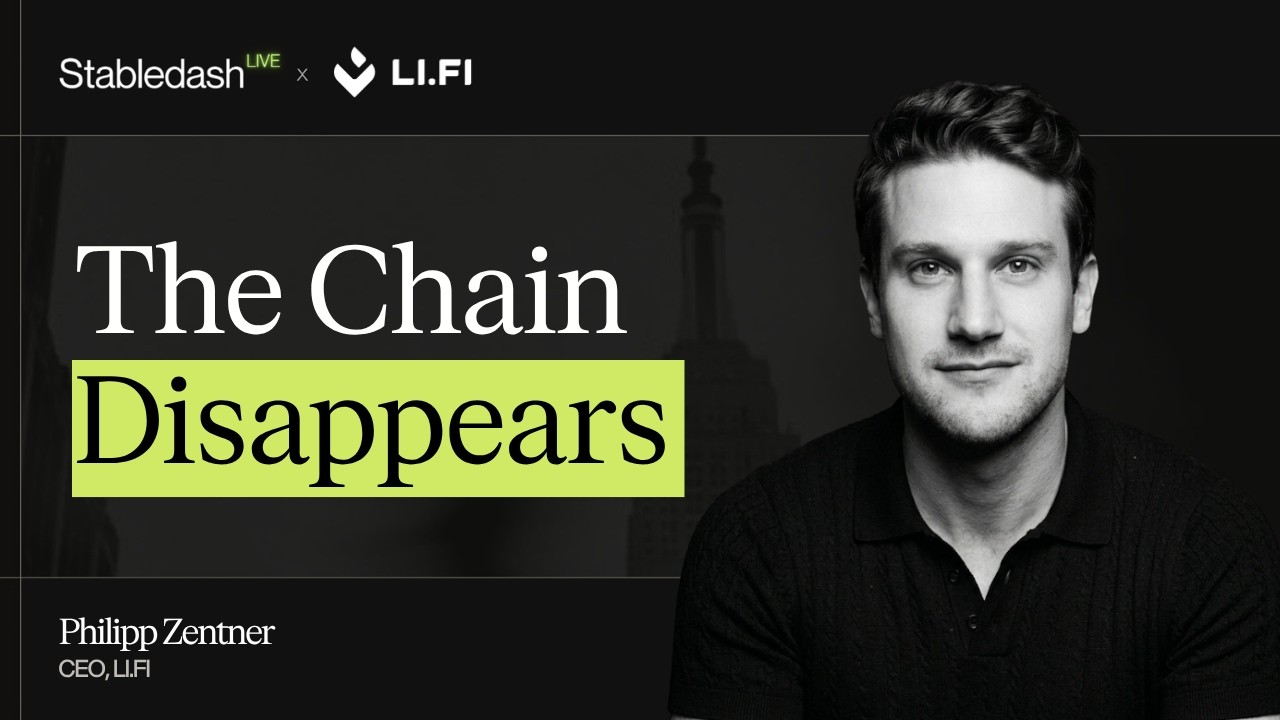
With  Philipp Zentner
Key takeaways
LI.FI started around 2021 as a cross-chain liquidity protocol and now aggregates DEX aggregators across 70 chains plus the bridges between them, Zentner says.
Zentner says LI.FI serves large wallets including Phantom, MetaMask, Robinhood and Coinbase, and no longer sees direct competition in B2B.
The company has just launched an Intent system, an open marketplace where third-party solvers compete on price and apps can plug in their own liquidity.
Watch the episode
Summary
Founder Philipp Zentner says the cross-chain aggregator has outlasted its B2B rivals and is now adding an open market for solvers and a consumer front end.
LI.FI began around five years ago, in 2021, as a cross-chain liquidity protocol, founder Philipp Zentner said in an interview recorded at Solana Accelerate. Today it aggregates the DEX aggregators across 70 chains and all the bridges in between, giving wallets and apps one way to move assets.
Who uses it
Zentner says LI.FI serves the large wallets, naming Phantom, MetaMask, Robinhood and Coinbase, and that it works closely with Phantom and Drift. He adds that a lot of neobanks are starting to work with the company too.
The pitch is chain abstraction. Users can pick assets from any chain and swap or bridge them into an application without being sent to an exchange or bridge and then coming back, Zentner says.
“B two b in crypto is extremely hard, and the margins are very thin. It's kind of the winner takes it all.”
Philipp ZentnerBeyond bridges
Zentner calls LI.FI the most comprehensive same-chain swap provider, routing across Jupiter, Titan, 1inch and other DEX aggregators. He says the product line has expanded a lot and now also includes yield aggregation.
The newest piece is the Intent system, which Zentner says they just launched. In this open marketplace anyone can become a market maker: third-party solvers compete for the best price, and an application that wants enough liquidity for certain assets can plug in its own.
A thin-margin market
Zentner says LI.FI no longer sees direct competition, and that former bridge aggregator rivals do not show up anymore, at least in B2B. He describes B2B in crypto as extremely hard, with very thin margins and a winner-takes-all dynamic. He argues the company is very net positive for the industry because it lets everything go to market faster.
Consumers and Solana
LI.FI also powers Jumper, its B2C interface for multi-chain swapping and bridging, which Zentner says has been around for four years. At the event he said he hoped more people would try it.
Zentner says people building on Solana have a mindset geared to consumer apps at scale and onboarding the next billion users, while Ethereum is more idealistic and moves slower. He praised Solana's user experience as fast and reliable.
Zentner describes a company that started with bridges in 2021 and now offers swaps, yield and an open solver marketplace to wallets, neobanks and its own Jumper front end. He frames it as having outlasted its rivals in a winner-takes-all market.



Phantom, Jupiter, Coinbase, and Drift come up most.
- People
- Drew Rogers
- Philipp Zentner
- Companies
- Phantom
- Jupiter
- Coinbase
- Drift
- MetaMask
- Robinhood
- Titan
- LI.FI
- 1inch
- CoinFund
- Dfns
- Multicoin
- Stripe
- Stripe Tempo