Key takeaways
Star.fun raised $500K in 24 hours through a livestream in July, which co-founder Adam Bergeman credits to the energy of people watching the team's belief.
Its livestream Shark Tank show raised $300K in an hour on its first episode and $1.1M across five episodes, and it is moving to a weekly cadence.
Adam Bergeman says the hardest problem is structuring ownership and investor rights around tokens, and expects more founders to raise onchain once that is solved.
Watch the episode

Summary
After its own viral raise, Star.fun turned livestreamed pitching into a weekly onchain Shark Tank and is adding curation markets to choose which founders get to raise.
Star.fun raised $500K in the 24 hours of a livestream fundraise in July, according to co-founder Adam Bergeman. He describes the start as "no motion, no backing, just a dream and a livestream," and says the raise went "mini viral" because of the energy of people seeing how much the team believed in its work.
From one raise to a show
Adam Bergeman says the team then needed an urgent and compelling reason for other founders to raise on Star.fun, which led to its livestream Shark Tank. The first episode in September raised $300K in an hour, he says, and five episodes have brought in $1.1M in total, the last in mid February.
“No motion, no backing, just a dream and a livestream.”
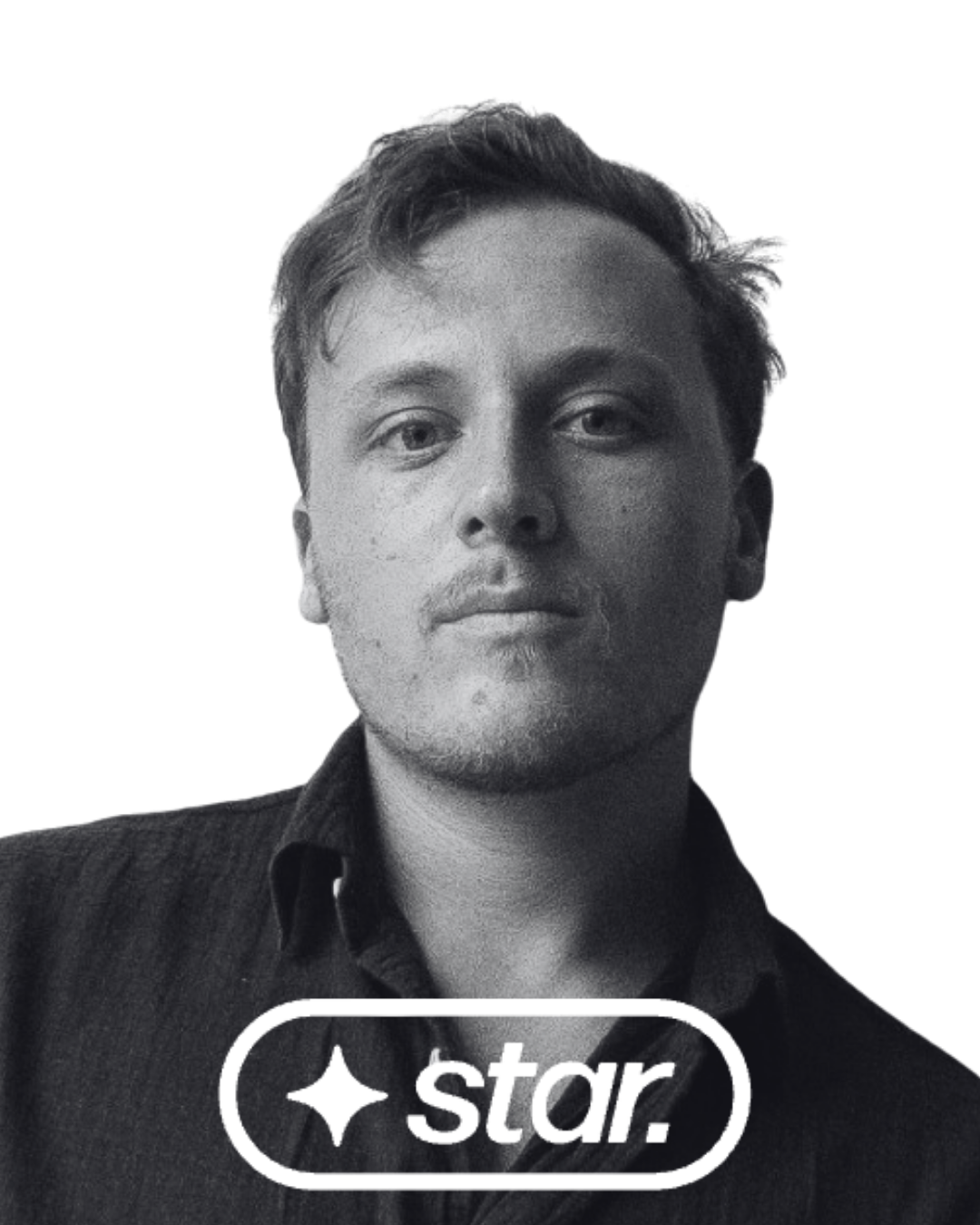 Adam Bergeman
Curation markets and a weekly cadence
Star.fun is announcing a new fundraising model and a weekly show. It adds curation markets, which Adam Bergeman describes as conditional markets used to trade on and decide which startup should go ahead and raise, a way to "distill noise into signal." Each founder gets a market denominated in the conditional market cap of STAR, the platform's native token.
He says the show will run weekly instead of daily at first, and the long-term plan is to run the conditional markets four to eight times a day. Part of the reason is that the team is "not the best curators." He points to Eden, a financialized first-person shooter whose raise failed because crypto gaming carries a bearish narrative.
Who raises and who invests
Adam Bergeman says the goal is to help founders who are comfortable pitching on a livestream raise what they need to get from zero to one. The main investors he targets are onchain angels writing $5K-$20K checks who bring strategic value, though VCs are welcome. He sizes the market at about 30,000 VC deals a year growing 30% yearly, plus 36,000,000 new GitHub projects a year.
Tokens and ownership
Founders on Star.fun choose between two models: Sutarky, an onchain treasury structure that STAR itself uses, and tokenized equity, run with a partner called Bedrock that bridges offchain equity with onchain tokens. Adam Bergeman contrasts this with Pumpcade, a pump.fun project he says raised $5M with no clear indication of what its token represents.
Adam Bergeman calls structuring ownership and investor rights around tokens "really difficult" and says it is different for every startup. He says that if this gets figured out, many more companies will come onchain and raise through platforms like Star.fun, and that he is confident it will happen.



Eden, Believe, Soar, and Bedrock come up most.
- People
- Adam Bergeman
- Drew Rogers
- Companies
- Eden
- Believe
- Soar
- Bedrock
- Pumpcade
- Farescale
- Surf Cash
- Star.fun
- pump.fun
- Dfns
- Meteora