Stabledash Live · · 27 min
Stablecoins for the AI Supply Chain: Taiwan, Chips and Digital Dollars
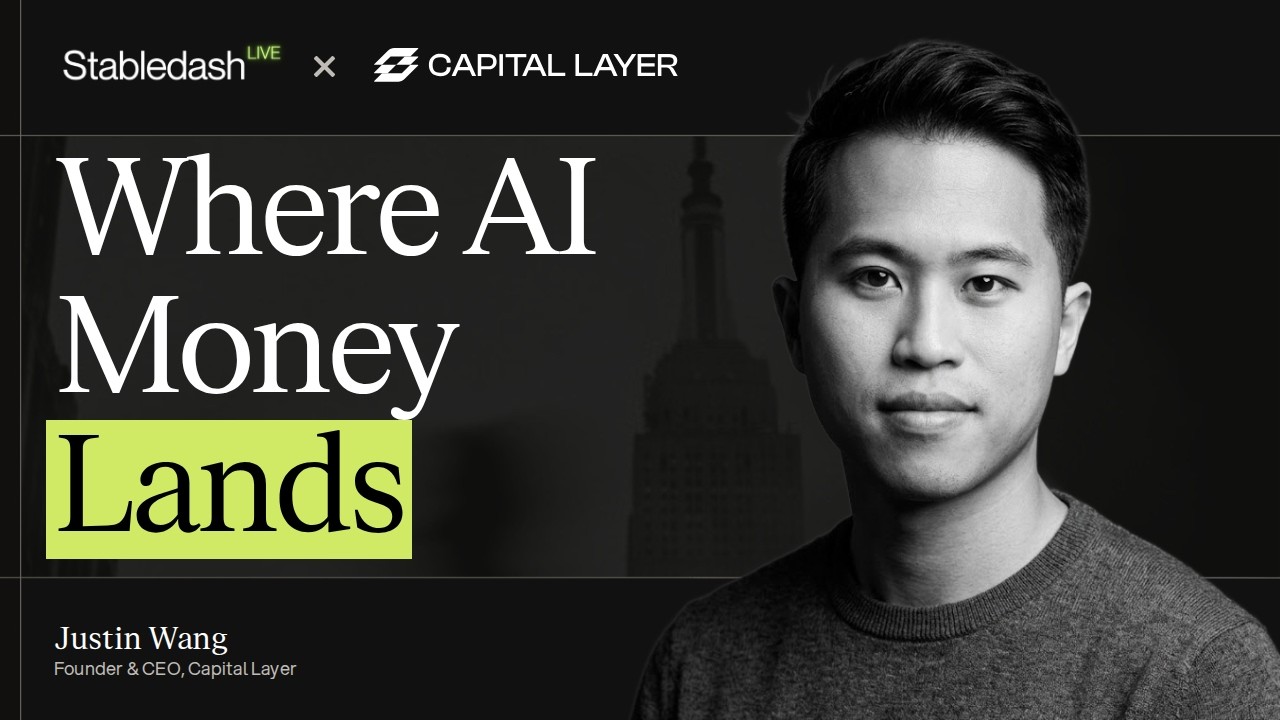
With  Justin Gainsley, Capital Layer
Key takeaways
Capital Layer began last year because Taiwanese semiconductor and AI supply chain companies were getting requests from clients and distributors to settle in stablecoins.
Gainsley says Capital Layer has built infrastructure for Taiwanese banks and expects many of them to receive stablecoins on behalf of enterprises by Q1 next year.
The company plans to embed stablecoin wallets in AI devices made in Taiwan and to deepen a Taiwan-Japan corridor with Japanese stablecoin issuers.
Watch the episode
Summary
Founder Justin Gainsley argues Taiwan's place in the AI hardware supply chain makes it the natural home for USD stablecoin adoption, and is building bank and device infrastructure to match.
Capital Layer was founded last year after semiconductor and AI supply chain companies in Taiwan started getting requests from clients and distributors to settle in stablecoins, founder and CEO Justin Gainsley said on Stabledash Live. He said that if there is only one place for USD stablecoin adoption, Taiwan will be the ideal place.
From DeFi to supply chains
Before Capital Layer, Gainsley's team built DeFi protocols on Solana. He said they got tired of it because there were no real adoptions or applications that could drive the real economy forward with stablecoins. He also said many buyers now paying AI suppliers in stablecoins are from sanctioned countries such as Russia and China, places forbidden from buying NVIDIA chips or AI servers.
“If there is only one place for adoption for USD stablecoins, I think Taiwan will be the ideal place.”
Justin GainsleyTaiwan's weight in AI
Gainsley said that out of every $10 spent in the US right now, $7 goes to AI infrastructure, and 6.5 of that goes to Taiwan. He said seven of ten new US data centers are built by Taiwanese people, that 90% of data center equipment or services come from Taiwan, and that Taiwan just surpassed $320 billion in trade with the US to become its third largest trading partner. He pointed to TSMC opening four factories in Arizona in the last two years.
Banks, wallets and devices
Gainsley said Capital Layer is building an operating system for banks in Taiwan, and expects that by Q1 next year many of those banks can receive stablecoins on behalf of enterprises. He said Taiwanese AI supply chain companies are saving roughly three to 6% versus local rails, and up to 10% in Latin America.
For the next six months to years, he said, the company wants to tackle AI devices and PCs made in Taiwan and sold globally, and become the wallet for stablecoin and credit card payments. Device makers do not want to hold custody, so stablecoin payments would move directly into banks in Taiwan.
Japan and beyond
Gainsley said six or seven of 10 data centers being built in Japan are from Taiwan, and that Capital Layer will work with several Japanese stablecoin issuers to bring the Taiwan-Japan corridor closer. He expects Southeast Asia to catch up on data centers in the near term, and said the company plans a big announcement at Computex next year.
Gainsley's case rests on scale: he said the compute market is on the path to a trillion dollars in the next two or three years, and that if a couple percent of it settled on stablecoins, that is where Capital Layer is heading. He added that if the GENIUS Act passes, there is work to do with Taiwanese AI supply chain manufacturers.


TSMC, Foxconn, HSBC, and Japan Security Token Association come up most.
- People
- Dante Disparte
- Jason Huang
- Justin
- Zach Fowler
- Zach Hughes
- Companies
- TSMC
- Capital Layer
- Foxconn
- HSBC
- Japan Security Token Association
- Defense
- NVIDIA
Ask AI about this conversation

Capital Layer
Coordinating stablecoin settlement, custody, and compliance between Asia