Key takeaways
Moneygram deprecated its TradFi sponsor-bank balance product to go all in on a non-custodial stablecoin wallet, which is now live in 150 countries.
Moneygram issues its own stablecoin, MGUSD, through Bridge, with M-Zero layered on top to give it options on yield, reserves and chains.
Luke Tuttle says restructuring into domain-based teams took the company from a board presentation to a live feature in 90 days.
Watch the episode

Summary
Product and technology chief Luke Tuttle explains why the company shut down its bank-based balance product, launched MGUSD and reorganized to move like a startup.
Moneygram has nearly 500,000 agent locations and operations in nearly 200 countries, and it now wants that network to run on stablecoins. Luke Tuttle, its Chief Product and Technology Officer, says the company launched its own stablecoin, MGUSD, and dropped its traditional balance product in favor of a non-custodial wallet.
One stack instead of many banks
Luke Tuttle says Moneygram chose a non-custodial wallet so it could offer a balance the same way everywhere, instead of buying banks or licenses one market at a time. "So we chose to deprecate our really TradFi based balanced product and go all in on a non custodial wallet," he says. He adds that delivering a balance on blockchain costs much less than doing it through a partner bank.
He credits the GENIUS Act with giving the owners, board members and executives who come from traditional finance "a framework that they could discuss it and understand it." The company already ran Ramps, which Tuttle calls the largest crypto-to-cash on/off ramp network in the world, built with USDC and Stellar as partners.
“Being conservative in today's world is not an option. You need to be advancing into these technologies because others are.”
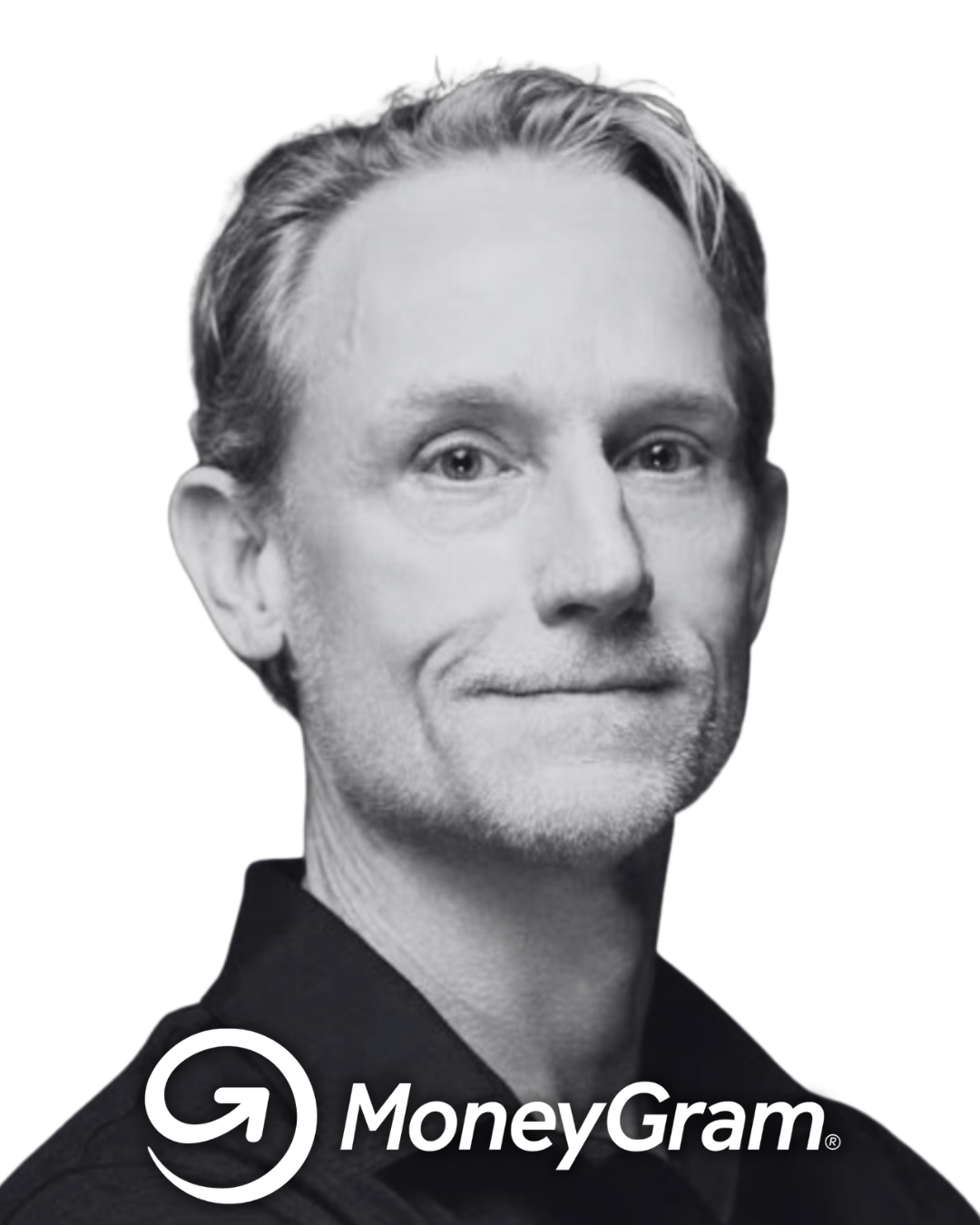 Luke Tuttle
Issuing MGUSD
MGUSD is issued on Stellar through Bridge, which lets Moneygram earn the maximum yield because it is the issuer. Putting M-Zero on top adds optionality, and Tuttle says he is "extremely confident" the company will not have to rearchitect the platform as reserves or chains change. The wallet shows USDC today, with the plan to show MGUSD instead. Separately, a treasury function trades stablecoins at nearly a $2 billion annual run rate on Fireblocks, using whichever coin gives the economic advantage.
Built like a startup
Luke Tuttle, who joined in February 2025, was employee number seven at Klarna in the U.S. and led product there. He restructured product, technology and design into domain teams to remove dependencies, rebuilt the entire app in React Native in the last twelve months, and has no chief AI or chief data officer. Partner Crossmint told him working with MoneyGram "is like working with a startup."
From the board conversation, the feature went live in 90 days, and the wallet is now in 150 countries, most recently Colombia and El Salvador.
Next, Luke Tuttle says, Moneygram wants a two-sided network in which a user in one country sends money to a user in another. His advice to leaders of older companies is to read The Innovator's Dilemma. In his words, "we had to disrupt ourselves."


Moneygram, Klarna, Bridge, and Fireblocks come up most.
- People
- Luke Tuttle
- Sebastian
- Companies
- Moneygram
- Klarna
- Bridge
- Fireblocks
- AWS
- Ripple
- M-Zero
- Crossmint
- Dfns
- eBay
- Experian
- MODIFI