Stabledash Live · · 25 min
Monad's Head of Payments Says the EVM Was Finally Perfected for Stablecoins
With 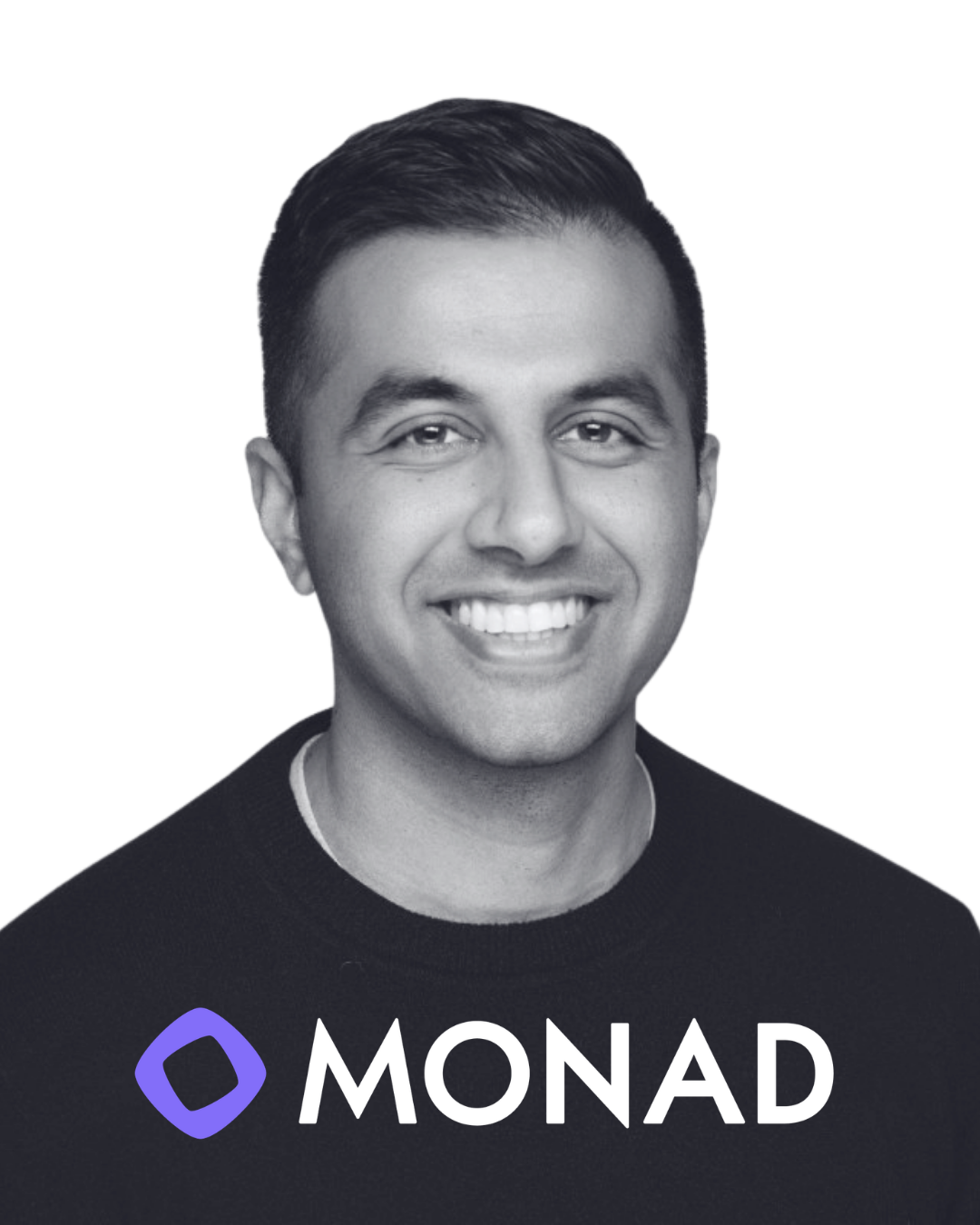 Raj Parekh
Key takeaways
The Monad Foundation acquired Portal, a deal announced in July, and Portal now operates as a subsidiary.
Raj Parekh says a $100 stablecoin transfer that could cost 10 to $20 on Ethereum mainnet costs less than a tenth of a penny on Monad.
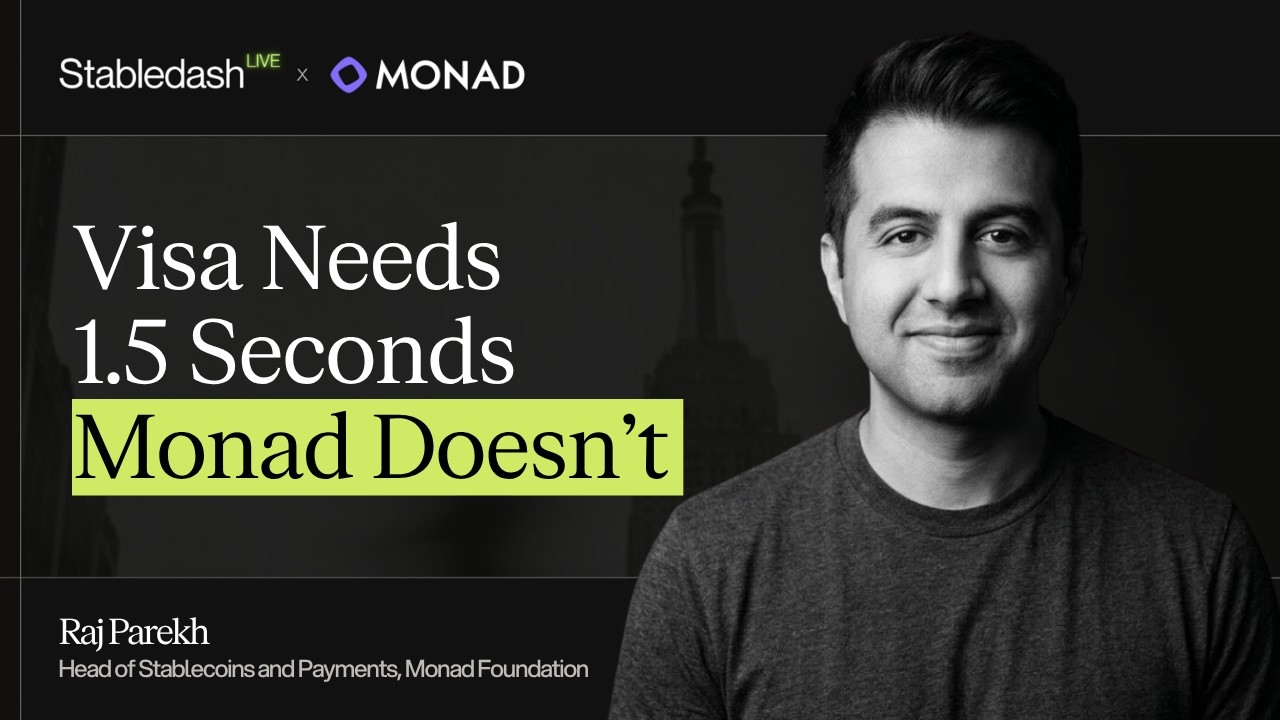
He says Monad can fit almost four transactions inside Visa's 1.5-second card authorization window, where most blockchains take five or ten seconds.
Watch the episode
Summary
Parekh argues that Monad's speed and fees let stablecoins meet card network rules, and that regulation will push builders toward chains like it.
The Monad Foundation acquired Portal, the crypto infrastructure company founded by Raj Parekh, in a deal announced in July. Parekh now holds two jobs: he still runs Portal, which operates as a subsidiary, and is head of payments on the Monad side, a role he has held for a little less than a year.
What Portal brings
Raj Parekh says Portal still moved billions of dollars through its platform in the last quarter or so, and that it enables 20 or 30 plus blockchains. In its early days, he says, he treated lawyers as product managers as part of the team's workflow.
“This is no longer a conversation of, like, why stablecoins is now with more when stablecoins and when blockchains.”
Raj ParekhCost and speed against cards
Raj Parekh says that with Monad it felt like the EVM was finally perfected, and he jokingly calls it end game architecture. On Ethereum mainnet, he says, moving $100 could sometimes cost 10 to $20, while on Monad it is less than a tenth of a penny.
He says Visa and the card networks need transaction finality in 1.5 seconds, and most blockchains take five or ten seconds or longer. Monad can do almost four transactions in that window, he says, which lets a firm cut its float: funds can earn yield on Aave or DeFi, then move to a treasury wallet and on to Visa.
Live uses and tokenized bonds
Raj Parekh points to a physical cash endpoint in LatAm where users deposit or withdraw Mexican pesos and receive USDC on Monad, and to NewRails, which issued a euro stablecoin for Asia-Europe cross border payments. With Etherfuse and Shinhan Bank, Korean treasury bonds are being tokenized on Monad. He says the bond yields about 1% through a local brokerage but can reach two or 3% on-chain, depending on DeFi lending activity.
He says Etherfuse is building a platform to tokenize assets, starting with the Mexican peso before moving to the Korean treasury bond.
Regulation and capital
Raj Parekh says policy groups have worked on regulatory clarity for almost a decade and that a lot of capital is sitting on the sidelines. He expects that as the CLARITY Act passes, builders will choose the best in class blockchains, and he says blockchains could at some point replace global stock exchanges.
Parekh's argument for Monad comes down to cost, finality and regulation. In his view the question is no longer why stablecoins, but when stablecoins and when blockchains.




Portal, Etherfuse, Rain, and Monad Foundation come up most.
- People
- Raj Parekh
- Michael Moser
- Drew Rogers
- Harry Alford
- Zach Fowler
- Companies
- Portal
- Etherfuse
- Rain
- Monad Foundation
- Aave
- Coin Center
- NewRails
- Wealthfront
- Wise
- World Remit
- Visa Ventures
- Shinhan Bank
- Dfns