Stabledash Live · · 29 min
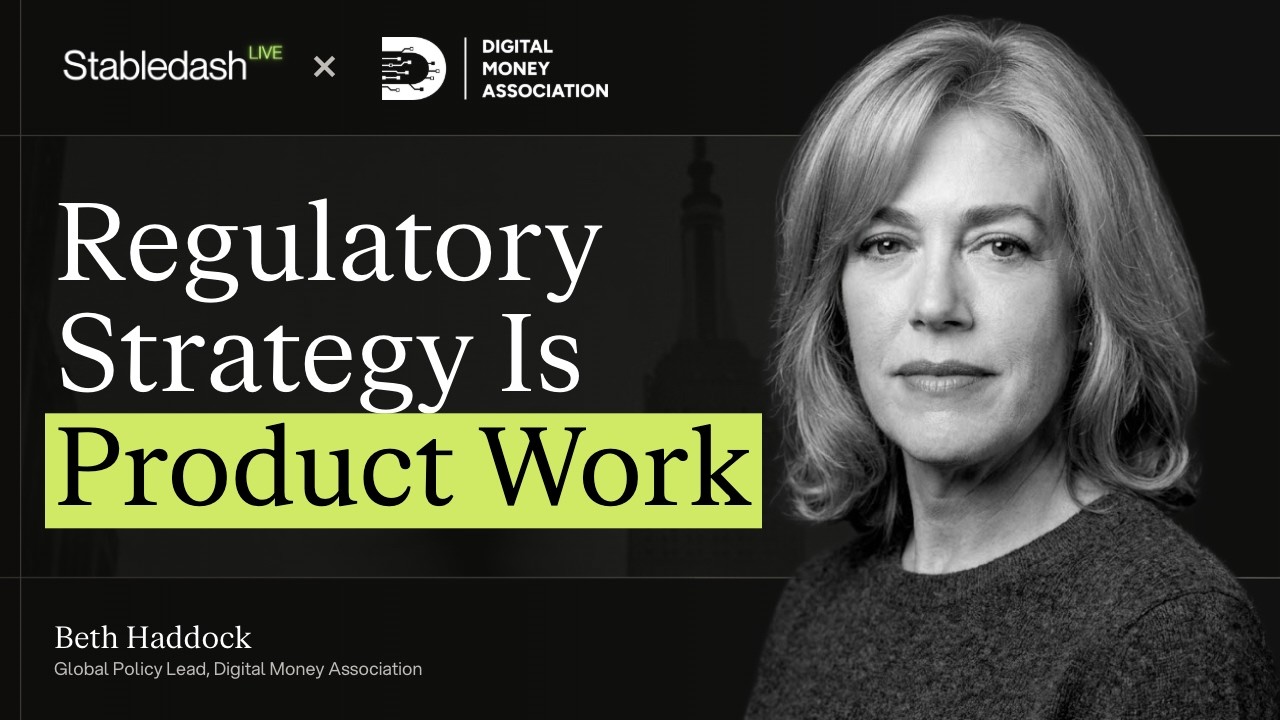
Founders Need a Second Roadmap: Beth Haddock on Regulatory Strategy
With 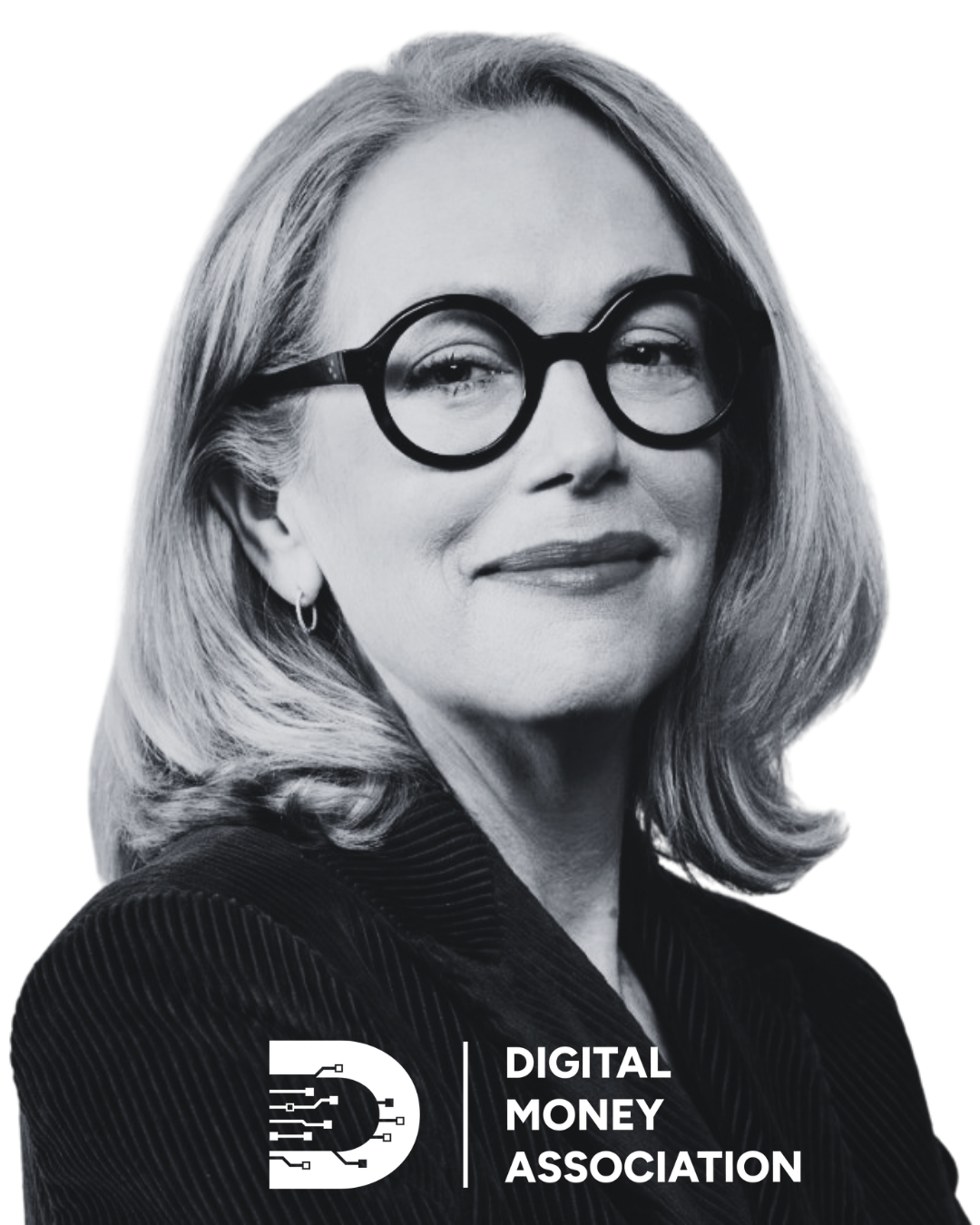 Beth Haddock
Key takeaways
Beth Haddock says founders should put as many resources into their regulatory strategy roadmap as into their product roadmap, and keep adjusting it as things change.
Digital Money Association, formerly Stablecoin Standard, has widened its scope from stablecoins to all digital money and set out a framework built on three pillars.
Haddock says nobody has figured out the authentication and verification layer for AI agents in commerce, while builders are already shipping agentic payments.
Watch the episode
Summary
The Digital Money Association policy lead argues the rules for stablecoin builders already exist, and points to AI agent authentication as the gap no one has closed.
Beth Haddock, who works on policy at the Digital Money Association, says stablecoin founders are not starting from a blank page. With the GENIUS Act in its rulemaking window and the CLARITY Act moving through Congress, she argues builders already have a stack of regulation to build against, and need a second roadmap for it.
A second roadmap
Beth Haddock says founders need a strategy and should spend as much on their regulatory strategy roadmap as on their product roadmap, keeping it agile. Even if new legislation does not pass, she says, the GENIUS Act and existing rules mean founders "really can still continue to build and grow."
Haddock left traditional financial services about ten years ago because she believed Web3 innovators offered a better paradigm. She also sits on the other side of the table as an independent board director and Compliance Committee chair at GMO-Z.com Trust, an NYDFS-regulated stablecoin issuer.
“There really isn't a lot of trust for central institutions, whether it's financial services or governments or media. So the more that we can rethink that and have it be decentralized, the better.”
Beth HaddockFrom stablecoins to digital money
The Digital Money Association rebranded from Stablecoin Standard because, Haddock says, the distinction between CBDCs, tokenized assets and stablecoins is becoming less important. Its policy group brought together academics, founders, attorneys, regulators and compliance professionals who disagreed with each other, so the frameworks would not be watered down by consensus. Its framework rests on consumer protection, responsible and innovative product design, and standards that set founders' obligations to users and stakeholders.
Washington and abroad
On the CLARITY Act, Haddock says there is hope for momentum before the August recess of the US Congress, but the proposed ethics provision does not yet look ready for bipartisan agreement. She says US policy has become very political compared with other jurisdictions, and notes that the UK and MiCA frameworks put weight on founder ethics and standards.
The agentic gap
Beth Haddock calls the missing authentication and verification layer for AI agents in commerce a really important issue to talk about. She adds that security and cyber are under-discussed, saying she has had clients who had 100,000,000 stolen.
Haddock's message to builders is that they have rules to work with now. In her view, the risks that call for attention are the ones without a framework yet: verifying AI agents and keeping systems secure.

Stablecoin Standard, Digital Money Association, and Lightspark come up most.
- People
- Beth Haddock
- Christian Gray
- Drew Rogers
- Zach Fowler
- Companies
- Stablecoin Standard
- Digital Money Association
- Lightspark
- GMO-Z.com Trust Company
- AXA
- Brown Brothers Harriman
- Circle
- Dfns
- Guggenheim