Stabledash Live · · 34 min
Deel's Stablecoin Payroll Just Went Live in Latin America, Powered by Mural Pay
With 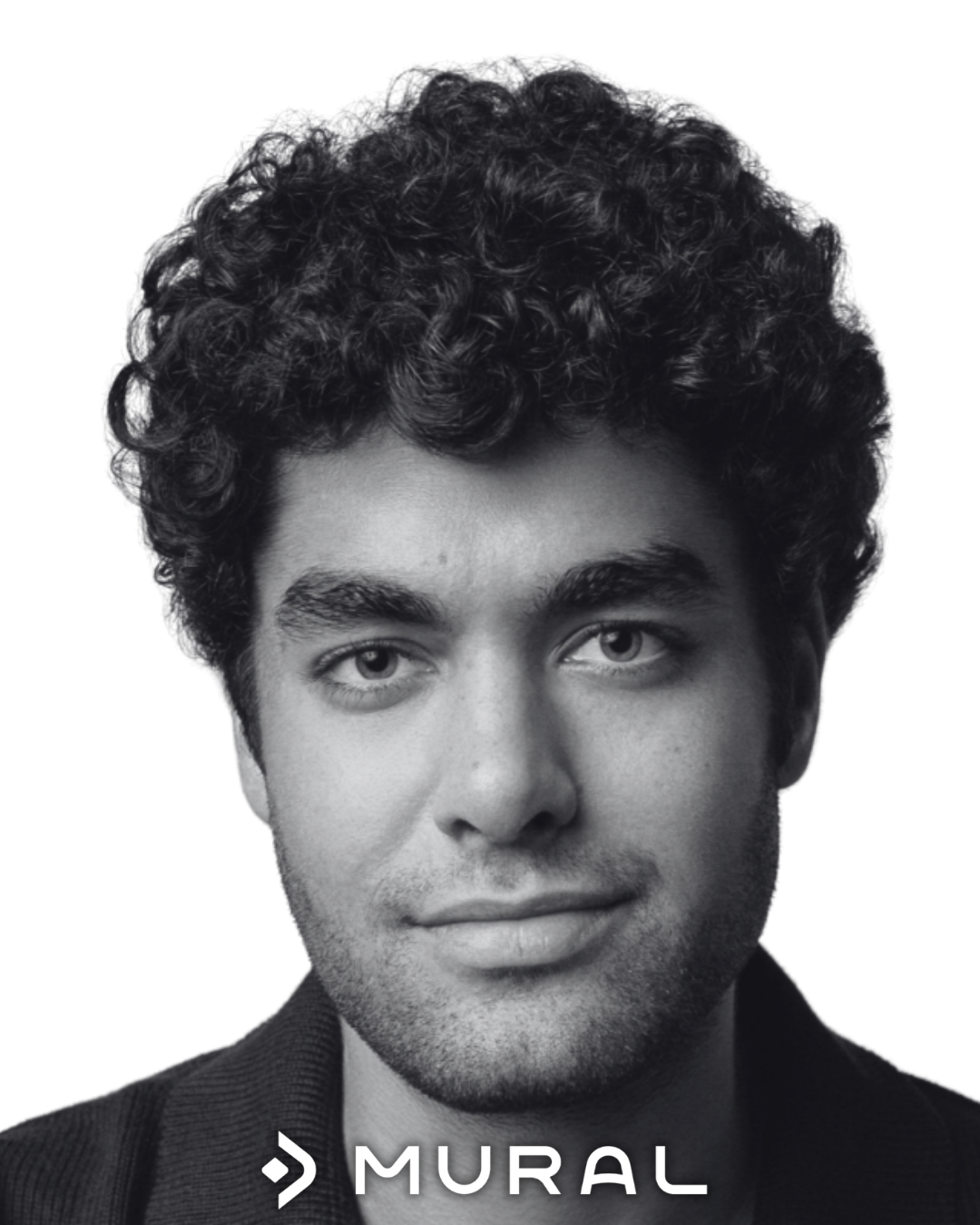 Sinclair Toffa
Key takeaways
Mural Pay is powering Deel's stablecoin payouts, so employees in Brazil, Argentina, Colombia, Mexico and other Latin American countries can withdraw salaries in USDC or USDT.
Toffa says employee payroll in Latin America is only legal if money moves from fiat account to fiat account, which gives a fiat, fiat, stablecoin sequence.
Mural Pay has agentic compliance in production, and Toffa calls compliance a strong competitive edge for the company.
Watch the episode

Summary
Mural Pay's CEO explains how Deel's stablecoin payroll for full-time employees works, and why he thinks compliance, not payments, is where agents help most.
Sinclair Toffa founded Mural Pay about four and a half years ago, and it started out paying contractors in Argentina and Colombia. Today it powers Deel's stablecoin payouts for employees across Latin America, which Deel announced publicly the week before. It is the first time a major employer-of-record platform has offered stablecoin payroll to full-time employees at scale.
How the payroll works
Through Deel, employees in Brazil, Argentina, Colombia, Mexico and other countries in the region can now withdraw their salaries in USDC or USDT, Toffa says. According to him, this is a different problem from contractor payments. For employee payroll to count as legal in Latin American jurisdictions, money has to go from a Deel fiat bank account into a named employee fiat bank account, and only then into a stablecoin wallet.
Toffa contrasts this with the usual stablecoin sandwich: "Here, it's fiat fiat stablecoin." Mural Pay has also moved its own team onto Deel, and will pay its staff with the feature it built.
“It's different than your traditional stablecoin sandwich where it's fiat stablecoin fiat. Here, it's fiat fiat stablecoin”
Sinclair ToffaInfrastructure over dashboards
Mural Pay is a licensed money transmitter (NMLS #2744530) that also powers payments for Bolt, Dollar App, Arc and Letio. Toffa says the company is leaning further into its API because customers want to build what Mural has made directly into their own platforms. He describes stablecoins as a new database that companies are building applications on top of.
He says Mural sees cross-border payments and FX as a feature, not the core product. The core is the account, which combines bank accounts and stablecoin accounts, and which he calls "the core ontological object" that businesses build on. To serve enterprise customers, Mural uses a forward-deployed engineering model taken from Palantir: engineers work with the customer and ship code the same day or the same week.
Compliance as the agentic unlock
Toffa argues that agentic compliance matters more than agentic payments, because for now you do not necessarily want an agent moving large sums on your behalf. Mural Pay's system is in production and handles automated KYC, sanctions screening and transaction monitoring, with the aim of cutting KYB and KYC review times. "Compliance is a very strong competitive edge of ours," he says, and the company is investing heavily there.
What comes next
Toffa says some customers have started asking for local stablecoins, such as a Colombian peso stablecoin, which he was not hearing about a year ago. In his view, these are appearing in markets where real-time settlement in local fiat is hard. Mural Pay is hiring for around 10 positions, and Toffa expects to announce news about capital and funding in the coming weeks.
Toffa presents Mural Pay as infrastructure built by listening to customers. The Deel deal shows that approach at work: employee payroll on stablecoin rails depends on regulatory plumbing and compliance as much as on the stablecoin itself.

Palantir, Mural Pay, Bolt, and Letio come up most.
- People
- Sinclair Toffa
- Andre Teixeira
- Drew Rogers
- Zach Fowler
- Companies
- Palantir
- Mural Pay
- Bolt
- Letio
- Deel
- Dollar App
- Alchemy
- Dfns
- Solana Foundation