Stabledash Live · · 24 min
Bitget Wallet Crossed 100 Million Users, Much of It From Emerging Markets
With  Alvin Kan
Key takeaways
Bitget Wallet has crossed 100 million users, counted as wallet addresses, and its daily payment transactions have overtaken trading transactions for the first time.
Alvin Kan says most of the growth comes from South Asia, Southeast Asia, Latin America and Africa, where the wallet plugs into local QR codes, bank transfers and e-wallets.
Card users swipe 10 to 15 times a month at about $10 to $13 per transaction, which Kan points to as evidence of everyday spending.
Watch the episode
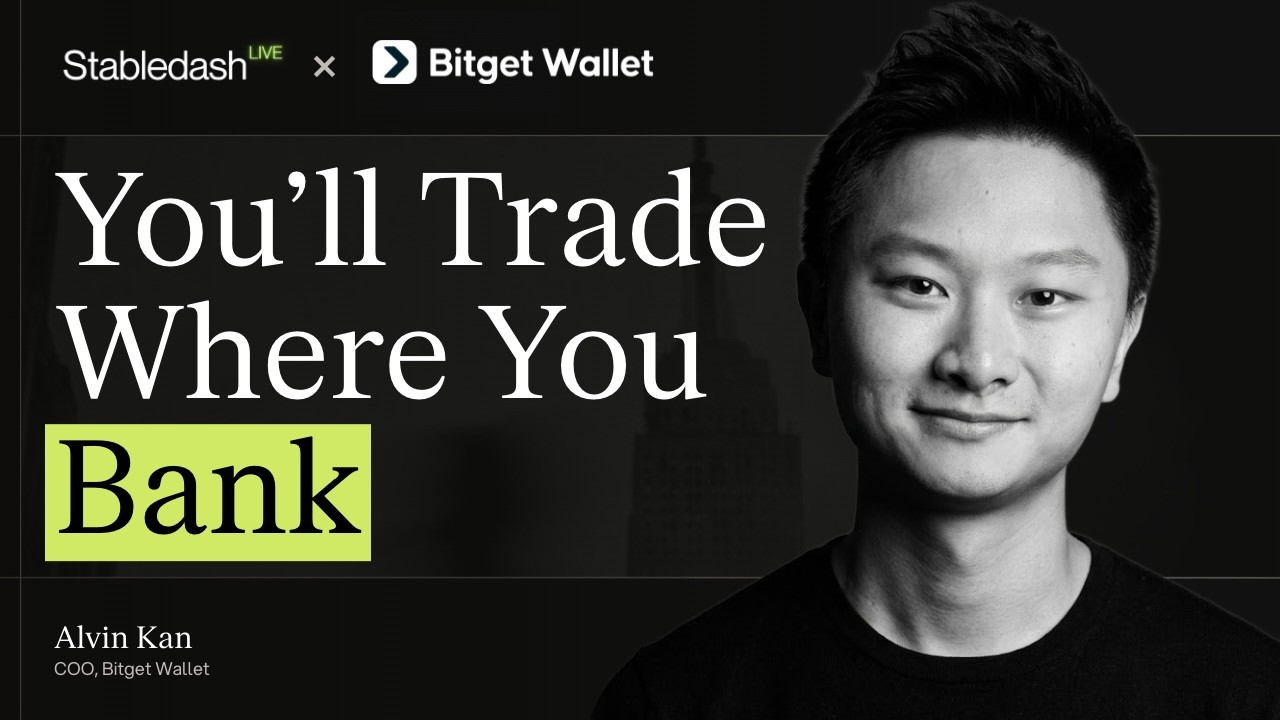
0:00Bitget Wallet is building an everyday finance app1 of 9
Summary
COO Alvin Kan says the wallet's growth now comes from emerging-market users who spend stablecoins on everyday purchases, not from speculative traders.
Bitget Wallet has crossed 100 million users of wallet addresses, according to Alvin Kan, who became the company's COO after leading ecosystem growth at BNB Chain and Sei Labs. Kan says that last month the number of payment transactions on the wallet passed the number of trading transactions on a daily basis.
From speculation to spending
Alvin Kan says that five years ago everyone would have named speculative trading as crypto's main use case, but today it is mostly payments and everyday finance. He says that over the last two years users holding stablecoins began asking how to spend them, which is when Bitget Wallet started building global payment rails.
“People may not bank where they trade, but they may trade where they bank. Right? And if Big Ed Wallet or Any Wallet becomes that trusted place for them to, you know, do their banking or everyday finance services, whether it's for payments, whether it's for savings, whether it's for earning yield and so on, they will start to use that platform to do some form of investments or trading”
Alvin KanLocal rails, region by region
Kan says much of Bitget Wallet's growth is coming from South Asia, Southeast Asia, Latin America and Africa. In Southeast Asia and Latin America, where QR payments are big, users can scan a grocery store's QR code and pay with a stablecoin. In Africa, he says, many stores take neither QR nor card payments but bank transfers, so users type in the merchant's account number and the crypto arrives as fiat. In Pakistan and other South Asian countries, users move crypto into dominant local e-wallets to off-ramp.
Small swipes, first cards
According to Alvin Kan, users swipe their cards about 10 to 15 times a month, spending about $10 to $13 per transaction, while some other crypto cards he has seen average over $700. For many emerging-market users, he says, the Bitget Wallet card was their first Visa or Mastercard, and after a few months of using it they started buying US stocks.
Trade where you bank
Kan says trading liquidity has rotated from meme coins to perps to RWAs, and in recent months to tokenized stocks. His view is that people may not bank where they trade but will trade where they bank. Because capital is most efficient in one place, he expects neobanks and trading apps alike to converge into super apps.
On the infrastructure side, Bitget Wallet rebranded its trading product as Bitget WalletX. Kan says the Bitget bridge has processed $1.95 billion in swap volume across almost a million orders.
Alvin Kan says the goal is for a wallet to eventually cover savings, earning, spending and borrowing, starting from trust. The company picks its markets on the belief that access to financial services should not depend on where someone was born or what they earn.




Bitget Wallet, Hyperliquid, Interactive Brokers, and Coinbase come up most.
- People
- Alvin Kan
- Drew Rogers
- Zach Fowler
- Companies
- Bitget Wallet
- Hyperliquid
- Interactive Brokers
- Coinbase
- Polymarket
- BNB Chain
- Dfns
- Robinhood
- Sei Labs