Stablecoin Conference · · 26 min
Inside the Arms Race to Stop AI Deepfakes From Beating Identity Checks
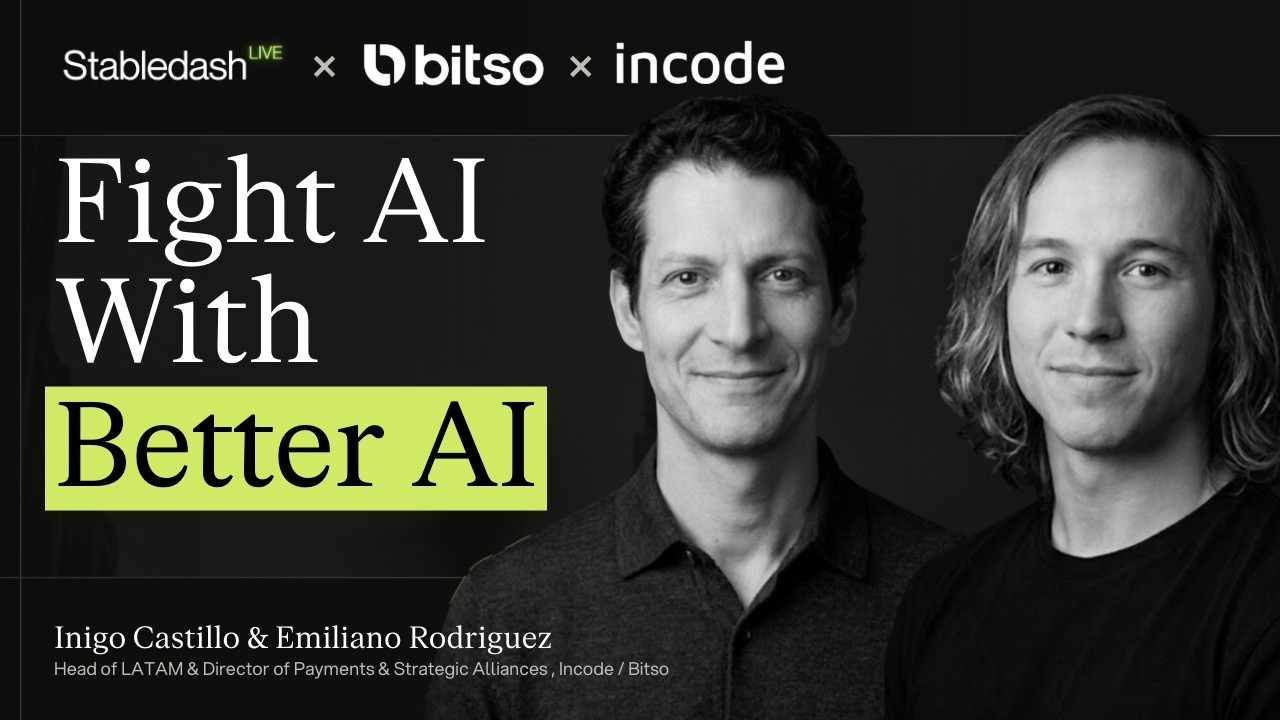
With Emiliano "Nano" Rodriguez
Key takeaways
Bitso says it serves more than 9 million retail users and 2,000 businesses, and it has picked Incode for identity validation during onboarding.
Emiliano "Nano" Rodriguez says Bitso evaluated more than 30 vendors and that Incode's strong LatAm footprint was one of the main differentiators.
Iñigo Castillo says fraudsters now use jailbroken phones with virtual cameras to slip deepfake videos past liveness checks, and only better technology can counter them.
Watch the episode
Summary
After reviewing more than 30 vendors, the crypto platform chose Incode as AI deepfakes make it harder to verify who is onboarding.
Bitso, which says it has more than 9 million retail users and 2,000 businesses, has chosen Incode as a partner for identity validation and other onboarding checks. Emiliano "Nano" Rodriguez of Bitso and Iñigo Castillo of Incode talked through the deal and the AI-driven fraud it is meant to stop.
A long vendor search
Emiliano "Nano" Rodriguez says Bitso, which has operated in the region for twelve years, built "one of the strongest, maybe longest RFPs" in the industry and evaluated more than 30 vendors across the region. He names Incode's strong LatAm footprint as one of the main differentiators against the others.
“AI is just giving all these tools to the to the fraudsters who are able to just increase the quality of of their attacks. Yeah. And and it's and the only way to counter that is with just better technology, better machine learning algorithms”
From probabilistic to deterministic
Iñigo Castillo says Incode pioneered verification against government databases in Mexico. Checking an applicant against a governmental source of truth, he says, turns identification from a probabilistic process based on algorithms into a deterministic one. He says Incode is also the first company able to connect to several US state databases.
Castillo also argues that owning its full stack sets Incode apart from competitors that bundle third-party technology, because "fraud is changing so fast. You need to adapt really fast."
How the fraud works
Iñigo Castillo describes fraudsters who get a jailbroken phone, install a virtual camera and slide deepfake videos into the onboarding process. He says Incode was built ten years ago to verify identity fully automatically, expecting a time when the human eye could no longer do it. He also cites a recent credit bureau leak in one of Incode's markets that let fraudsters request credit in other people's names. He adds that biometric re-authentication, such as a device change, opens a window for account takeover.
Preparing for what comes next
Emiliano "Nano" Rodriguez predicts that as AI evolves at an exponential rate, fraud will become very hard to detect on digital platforms. He advises peers to be prepared and to work with a robust identity partner. Iñigo Castillo expects the next frontier to be agents: with people running hundreds of agents that move funds, he says, processes will be needed to identify who is behind them.
Both executives describe identity verification as a technology race. Iñigo Castillo says AI is raising the quality of attacks and that the only answer is better machine learning, and Emiliano "Nano" Rodriguez says Bitso chose its partner with that pace of change in mind.



Bitso, Agora, and Incode come up most.
- People
- Iñigo Castillo
- Emiliano "Nano" Rodriguez
- Drew Rogers
- Companies
- Bitso
- Agora
- Incode
- Dfns